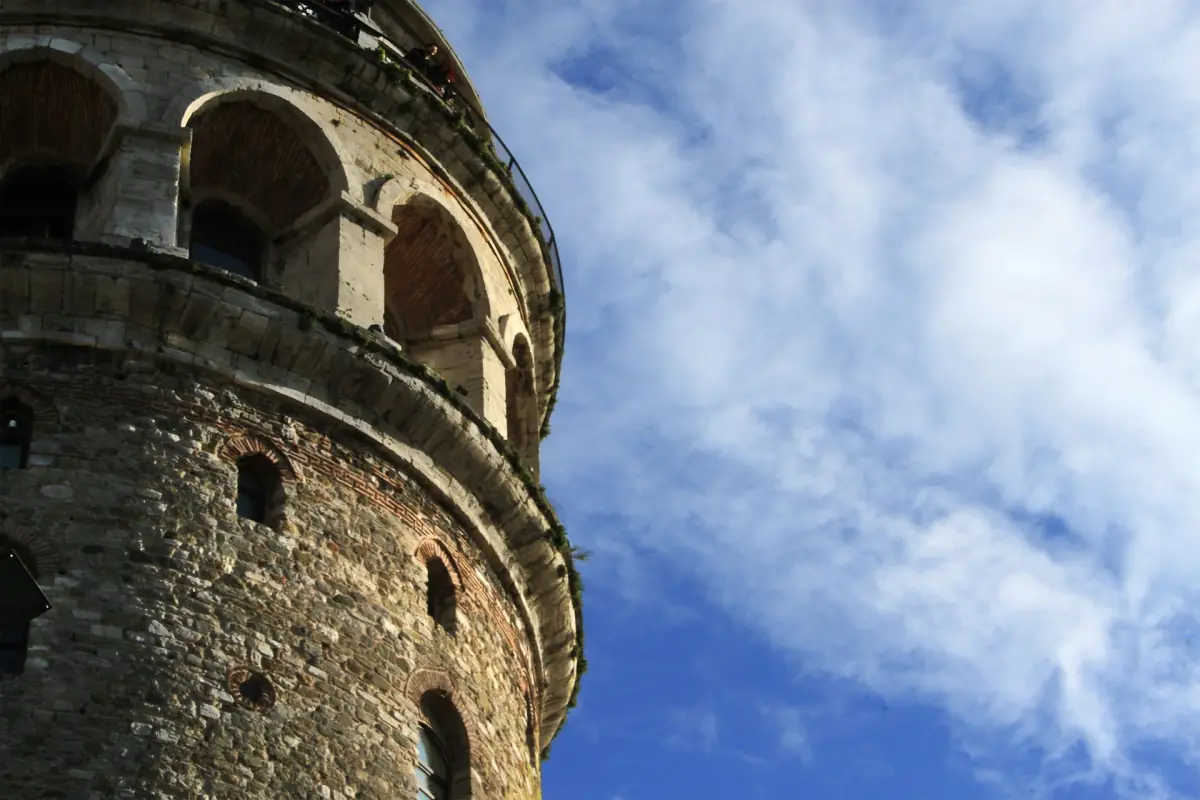
Galata Tower history begins with Genoese Galata
Galata Tower history begins with the Genoese fortifications of Galata: the present tower dates to 1348. Its position in today's Beyoğlu district makes it a useful starting point for reading the neighbourhood, from the stone tower to the streets connecting Galata, Karaköy and İstiklal. A walk around the exterior and a visit inside offer different ways to approach that history.
Start by deciding whether your priority is the building or the wider district. The historical walks here include a shared Galata route, a longer walk from Tünel and an outing linking the tower area with the Golden Horn. Tower admission is separate on the shared walk and included only with the all-inclusive option of the Golden Horn outing. For other routes, see Galata walking tours.

Guided historical walks
Choose the all-inclusive option for a tower ticket, or a neighbourhood walk with admission extra. The Tünel departure includes tram tickets.
Hand-picked tours, booked through Viator and GetYourGuide. Prices are indicative starting prices in euros (as of October 2026). Tap a tour for live availability and the current price in your currency.

Guided Istanbul walk and transport
- Professional English Speaking Guide
- Transport by Ferry, Tram, Bus
Galata Tower admission is included only with the all-inclusive option; otherwise it is extra.
Check availability →
Neighbourhood walk from Tünel
- Drinking water
- Tram tickets
- English, French, Spanish-speaking tour guide
A guided walk with tram travel; a tower ticket is not included in the listed inclusions.
Check availability →
Galata walking tour with a guide
- Walking tour
- Tour guide
Choose the shared standard walk or the private option. Tower admission is extra for both.
Check availability →Walk through Galata's historical layers
Choose the shared Galata walk, the Tünel route with tram tickets or the Golden Horn outing. Tower entry is extra on the shared walk and included only in the Golden Horn outing's all-inclusive option.
The Genoese tower of 1348
The surviving tower belongs to the Genoese development of Galata in the middle of the 14th century. Its historical name, Christea Turris, refers to a cross at the summit. Keeping that origin in mind helps distinguish the medieval fortification from the later uses and alterations that shaped the building visitors see today.
The tower forms part of the UNESCO Tentative List context of Genoese fortifications in the Mediterranean and Black Sea region. This is a tentative listing, rather than inscription as an individual World Heritage property. The wider historical setting is useful when looking at Galata as a neighbourhood instead of treating the tower as an isolated monument.
Ottoman uses and changes to the roof
During the Ottoman period the tower served at times as a prison and later as a fire watchtower. Earthquakes and fires repeatedly affected the building. These changes in function are central to its story: the tower was adapted for different needs as the surrounding city developed.
After the fire of 1831, Mahmud II had the upper part redesigned. A storm destroyed the wooden roof structure in 1875, while strengthening and restoration work followed from 1964 to 1967. The familiar outline therefore brings together a medieval stone body and the results of later interventions. It is more helpful to look for those layers than to imagine an untouched building from a single date.
Architecture, historic buildings and the museum
The cylindrical stone tower measures 62.59 metres to the roof tip. Its architectural description counts 11 levels, including the basement, ground floor and mezzanine. That total uses a different system from the visitor floor numbers. Inside, the lift reaches floor 6, stairs continue to the panorama on floor 8, and floor 7 contains a city model at a scale of 1:2500.
The museum conversion in 2020 removed later reinforced-concrete additions and the cafeteria and introduced an exhibition about Istanbul's history. Approach the interior as a museum visit with an upper panorama. The interior and viewpoint guide explains the route through the building; the ticket guide separates admission arrangements from guided neighbourhood walks.
Which history walk fits your visit?
The shared city walk starts on the Karaköy waterfront and includes a guide and a walking route. Tower tickets, food, drinks and hotel transfer are extra. It suits visitors who want historical context while moving between the neighbourhoods rather than arranging their day around a tower interior visit.
The longer Tünel departure meets outside the Beyoğlu funicular station. It includes a guide in English, French or Spanish, drinking water and tram tickets. The Golden Horn outing instead meets beside the tower and includes an English-speaking guide, donations and transport by ferry, tram and bus. Its tower ticket belongs specifically to the all-inclusive option. Keep the exact meeting point in your booking details handy, especially when arriving from another part of the city.
Hezarfen and the stories attached to the tower
The account of Hezarfen Ahmed Çelebi flying from the tower towards Üsküdar is a tradition associated with Galata. Read it as a story passed down about the place, rather than as an independently established flight record. It adds a different kind of interest alongside the documented building changes and Ottoman uses.
Topkapı and Ottoman history
For a separate visit focused on the Ottoman palace, continue with Topkapı Palace. Plan it as its own museum outing with its own visitor arrangements. The historical walks on this page concentrate on Galata and their stated routes.
Questions about Galata's past
When was the present tower built?
The present Genoese tower dates to 1348 and formed part of Galata's fortifications.
What was the tower used for?
Its uses included a prison and a fire watchtower in Ottoman times. The museum conversion described here took place in 2020.
Do the history walks include tower entry?
The shared Galata walk has admission extra. The Golden Horn outing includes tower entry only when you choose its all-inclusive option.
Is Hezarfen's flight a historical fact?
The flight to Üsküdar is presented as a tradition associated with the tower, as a story passed down about the place.